
Need hands-on LLM developers?
Oodles provides experienced LLM developers who design, build, and operate production-grade language model systems with evaluations, observability, security guardrails, and cost controls.
LLM developers who ship reliable, governed AI features
Work with Oodles AI’s LLM developers to build production-ready applications using large language models. Our engineers specialize in retrieval-augmented generation (RAG), prompt engineering, fine-tuning, safety layers, and scalable APIs aligned with enterprise data and governance requirements.
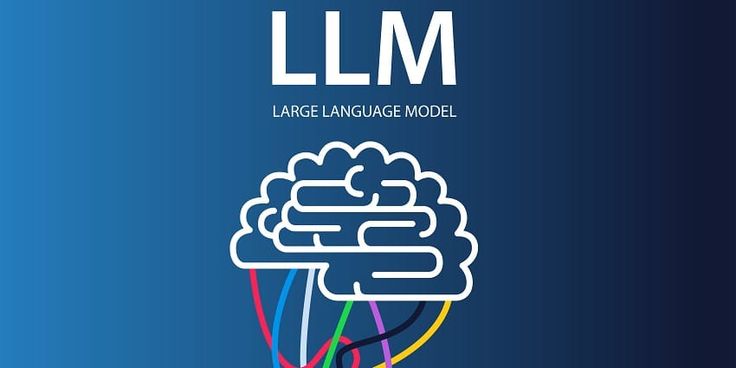
Build, align, and ship with the right guardrails
Our LLM developers manage the full lifecycle of language model systems using Python, FastAPI, LangChain, vector databases, and cloud infrastructure. We deliver RAG pipelines, prompt frameworks, fine-tuned models, safety filters, monitoring dashboards, and operational runbooks to keep LLM features stable in production.
What we deliver
- • Retrieval-augmented generation (RAG) using vector databases and embeddings
- • Prompt engineering frameworks with safety and policy enforcement
- • Fine-tuning and parameter-efficient tuning (LoRA, adapters)
- • Evaluation pipelines, red-teaming, and regression testing
- • Production APIs with logging, monitoring, and cost optimization
Why it works
- • Architecture-first approach to model selection and latency optimization
- • High-quality data pipelines with chunking, metadata, and retrieval tuning
- • Built-in safety: PII masking, content filters, and jailbreak resistance
- • Cost efficiency through caching, batching, and token budgeting
- • Reliability ensured by automated evals and performance monitoring
Where our LLM developers plug in
Targeted engineering support across product, data, and platform teams.
RAG apps
Search, summarization, and assistant applications using vector search, citations, and fallback logic.
Agent workflows
Multi-step agent systems with tool calling, orchestration, and guardrails for controlled execution.
Domain tuning
Fine-tuning and PEFT methods to align model outputs with domain, tone, and compliance requirements.
Safety & compliance
PII detection, output filtering, jailbreak testing, and audit-ready logging pipelines.
Product integrations
API-driven LLM features integrated into web, mobile, CRM, and internal platforms.
Evals & monitoring
Golden datasets, regression testing, drift detection, and dashboards for quality and cost visibility.
How our LLM developers deliver
A disciplined build-measure-iterate workflow used by Oodles to deliver secure, scalable, and production-ready LLM systems.
Architecture & model choice
Select the optimal LLM family, context window, and performance profile.
Data & retrieval setup
Set up embeddings, vector search, and retrieval logic to ground responses.
Safety & guardrails
Implement safety layers including PII masking, abuse filters, and policy checks.
Evals & tuning
Run evaluations, prompt tuning, and fine-tuning to improve accuracy.
Deploy & observe
Deploy APIs with monitoring, alerts, and cost controls for production use.
FAQs (Frequently Asked Questions)
LLM developers design and build applications powered by large language models—including RAG systems, prompt engineering, fine-tuning pipelines, and production deployment. Hire one when you need custom AI solutions beyond off-the-shelf chatbots, such as enterprise knowledge assistants, document Q&A, or domain-specific agents.
We build RAG pipelines by ingesting your documents, chunking them, embedding with OpenAI/Cohere/local models, and storing in vector databases (Pinecone, Weaviate, Chroma). The LLM receives retrieved context at query time to reduce hallucination and cite sources. We optimize for accuracy, latency, and cost.
Yes. We fine-tune open-source models (Llama, Mistral) and OpenAI models via the API using your labeled data. We run rigorous LLM evaluation—accuracy, safety, latency—and use tools like LangSmith and custom metrics. We also handle LoRA, QLoRA, and full fine-tuning based on your budget and data size.
Prompt engineering is the practice of crafting input prompts to get the best outputs from LLMs. We design system prompts, few-shot examples, chain-of-thought, and structured outputs. We use LangChain, LlamaIndex, and custom orchestration. We also implement prompt ops—versioning, A/B testing, and monitoring—for production systems.
We deploy on AWS, GCP, or Azure with containerized services, load balancing, and auto-scaling. We optimize for latency (caching, batching) and cost (model routing, token limits). We add monitoring, logging, and guardrails for safety. We also support on-premise and hybrid deployments for regulated industries.
We work with OpenAI GPT-4, Anthropic Claude, Google Gemini, and open-source models (Llama, Mistral, Qwen) via Ollama, vLLM, or cloud APIs. We design architectures that are model-agnostic so you can swap providers or use multiple models for different tasks. We help you balance quality, cost, and latency.
We use RAG to ground answers in your data, add output parsers and validation, and implement guardrails (NeMo, LlamaGuard) for harmful content. We apply human-in-the-loop for high-stakes decisions and monitor for drift. We follow OWASP LLM guidelines and compliance best practices.
Need senior LLM developers? Let's talk






We are ISO 9001:2015 Certified
Connect with us

Follow us