
Pixel-Perfect Image Segmentation Powered by Deep Learning
Oodles builds pixel-accurate image segmentation solutions that convert raw imagery into structured, machine-readable data. Our engineers develop custom semantic, instance, and panoptic segmentation models using U-Net, Mask R-CNN, DeepLab, Segment Anything (SAM), and YOLOv8-Seg, optimized for real-world production workloads.
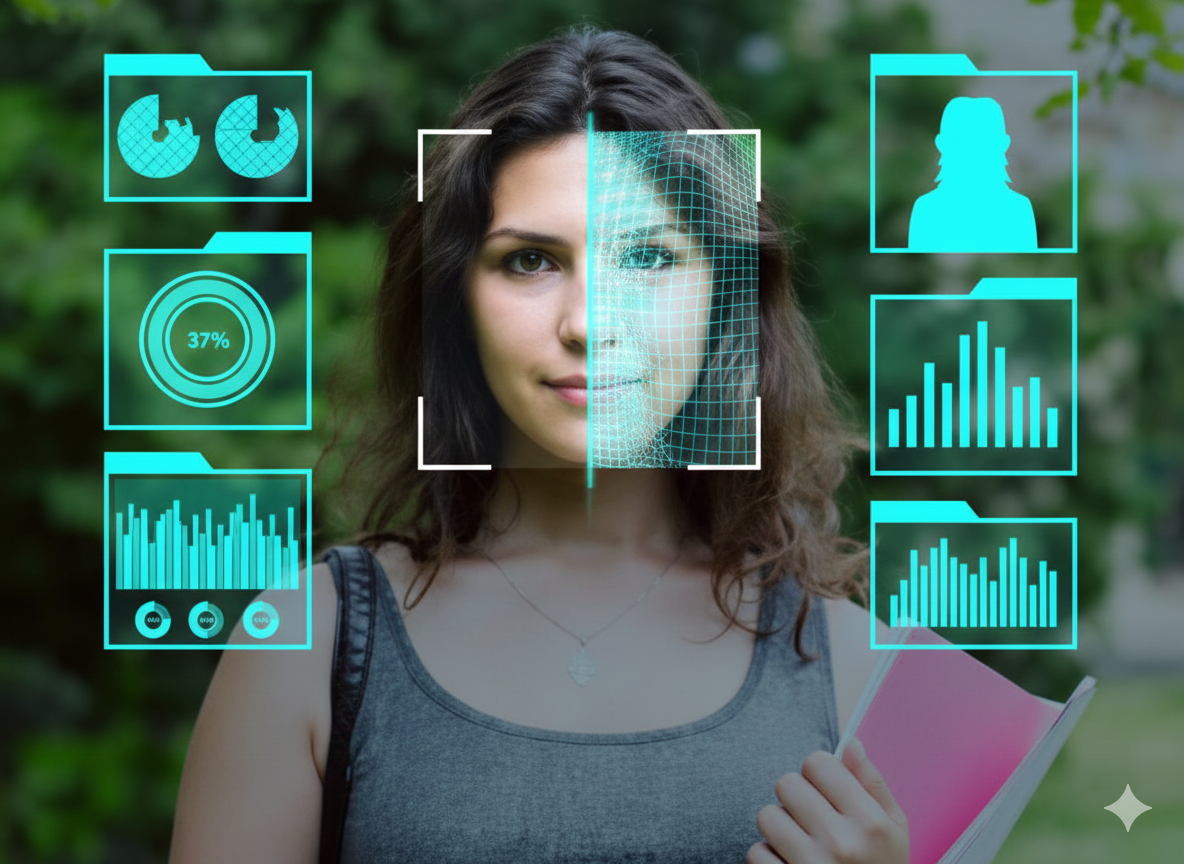
What is Image Segmentation?
Image segmentation assigns a class label to every pixel in an image, enabling precise boundary detection and region-level understanding. Unlike bounding-box detection, segmentation delivers pixel-level accuracy that is critical for medical diagnostics, autonomous systems, industrial inspection, and geospatial analysis.
What We Deliver
Semantic Segmentation
Pixel-wise classification using DeepLab, U-Net, and SegFormer to separate regions such as roads, organs, vegetation, or materials.
Instance Segmentation
Precise object-level masks built with Mask R-CNN, YOLOv8-Seg, and Detectron2 to isolate each individual instance in complex scenes.
Panoptic Segmentation
Unified semantic and instance segmentation pipelines for complete scene understanding in dense, multi-object environments.
Medical Image Segmentation
Unified semantic and instance segmentation pipelines for complete scene understanding in dense, multi-object environments.
Real-Time Segmentation
Low-latency segmentation with lightweight architectures such as MobileSAM and Fast-SCNN, optimized for edge and embedded devices.
Custom Dataset & Annotation
Low-latency segmentation with lightweight architectures such as MobileSAM and Fast-SCNN, optimized for edge and embedded devices.
High-Impact Use Cases
Medical Imaging
Pixel-level segmentation of tumors, organs, cells, and vessels for diagnostic and clinical decision support.
Autonomous Vehicles
Segmentation of drivable areas, lanes, pedestrians, and traffic elements for perception stacks in autonomous systems.
Satellite & Aerial Imagery
Land-cover, building footprint, road network, and disaster-impact segmentation from aerial and satellite data.
Industrial Quality Control
Fine-grained surface and component segmentation to detect defects on production and assembly lines.
Agriculture
Crop, weed, and disease segmentation from drone and field imagery to support precision farming.
Retail & E-commerce
Product and foreground segmentation for virtual try-on, background removal, and catalog automation.
FAQs (Frequently Asked Questions)
Image segmentation services deliver pixel-level precision using deep learning models like U-Net and Mask R-CNN, enabling highly accurate object detection and scene understanding in AI applications.
Industries including healthcare, autonomous vehicles, agriculture, satellite imaging, retail, and manufacturing use image segmentation for medical diagnostics, defect detection, and real-time automation.
Semantic segmentation labels each pixel by category, while instance segmentation distinguishes separate objects within the same class, improving object-level analytics and AI performance.
Image segmentation services use advanced CNN architectures such as U-Net, Mask R-CNN, DeepLab, and transformer-based models to achieve scalable and high-precision visual intelligence.
Image segmentation integrates with cloud AI platforms, APIs, edge devices, and real-time processing pipelines to enable automated decision-making and scalable deployment.
Performance is optimized through GPU acceleration, distributed training, model pruning, and cloud-based scaling to handle high-volume image datasets efficiently.
Professional image segmentation improves detection accuracy, reduces manual inspection costs, accelerates AI deployment, and enhances operational efficiency across enterprise environments.
Ready to build with Image Segmentation? Let's get in touch







We are ISO 9001:2015 Certified
Connect with us


Follow us