
AI-Powered Chatbot Development Services
Oodles builds enterprise-ready AI chatbots using Python backends, transformer-based language models, REST APIs, and cloud-native architectures to automate conversations and improve customer engagement across platforms.
What is Chatbot Development?
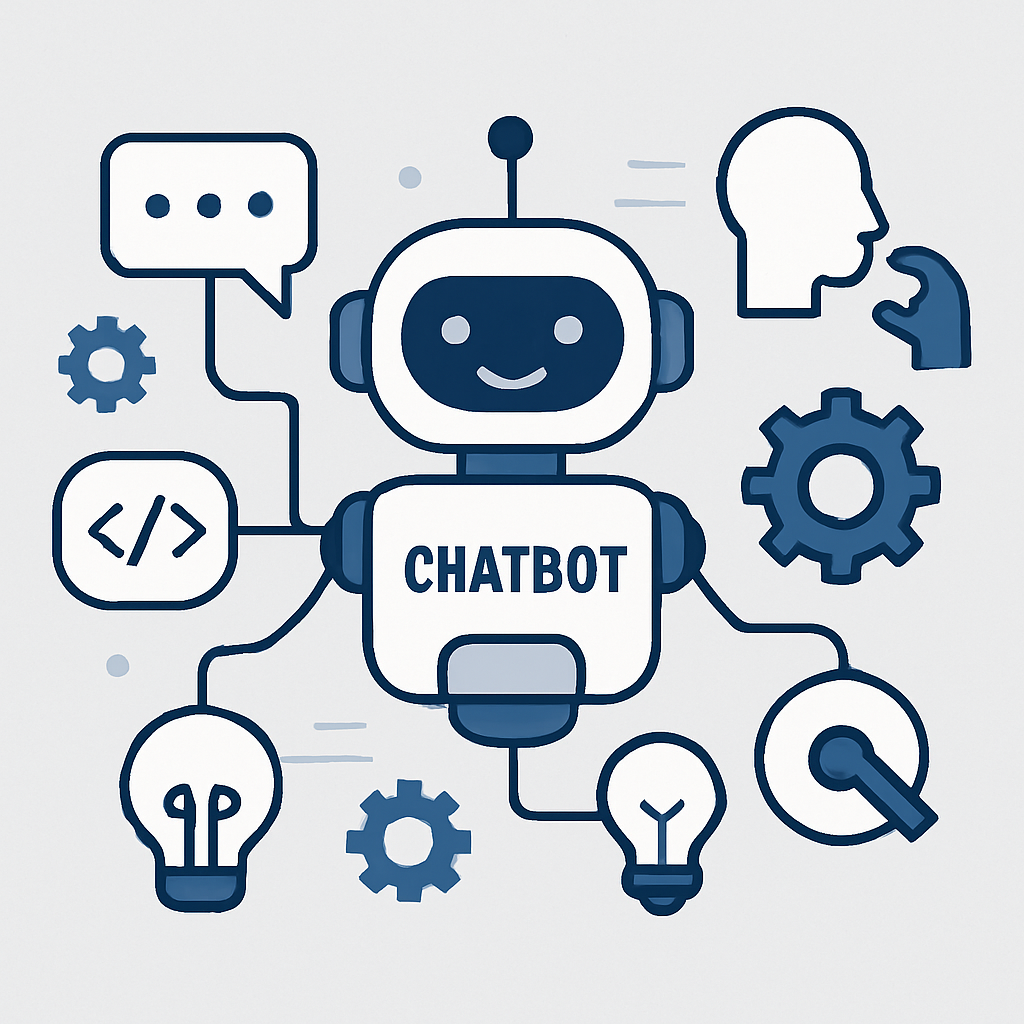
Chatbot development focuses on creating conversational software that understands user intent, manages dialogue context, and generates accurate responses. These systems are engineered using NLP pipelines, intent classification, entity extraction, and large language models.
At Oodles, chatbots are implemented using Python (FastAPI), JavaScript-based frontends, LLM integrations, and secure API-driven architectures.
Why Choose Oodles for Chatbot Development Services?
24/7 Conversational Automation
AI chatbots that operate continuously without manual intervention
Scalable Backend Architecture
Python-based services designed to scale with traffic.
Context-Aware Conversations
Session memory and state management for multi-turn dialogue accuracy.
Multi-Channel Deployment
Deploy chatbots on websites, mobile apps, WhatsApp, Slack, and MS Teams.
Conversation Analytics
Track intents, response quality, fallback rates, and user engagement.
Secure API Integrations
Encrypted REST APIs with role-based access and compliance controls.
Our Chatbot Development Process
A structured workflow used by Oodles to build scalable chatbot systems.
1
Discovery & Intent Mapping
Define chatbot goals, user intents, entities, and conversation flows.
2
Conversation Design
Design dialogue logic, fallback handling, and response structures.
3
Backend & AI Integration
Integrate NLP models, LLMs, Python APIs, and external systems.
4
Testing & Optimization
Evaluate intent accuracy, latency, and response quality.
5
Deployment & Monitoring
Deploy chatbots with analytics, logging, and continuous improvement.
Chatbot Technology Capabilities
NLP & Intent Classification
Tokenization, embeddings, and intent classifiers using Python NLP libraries.
LLM Integration
Transformer-based language models for contextual response generation.
Conversation Memory
Persistent context storage for accurate multi-turn conversations.
Text-Based Support
Secure, text-first chatbot systems optimized for enterprise use cases.
RAG-Based Responses
Combine vector search with LLMs for grounded, factual responses.
Human Escalation
Seamless handoff from chatbot to live support agents.
FAQs (Frequently Asked Questions)
AI chatbot development services involve designing and deploying intelligent chatbots powered by NLP and machine learning to automate customer support, lead generation, and business communication.
AI chatbots provide instant responses, personalized recommendations, multilingual communication, and 24/7 availability across websites, mobile apps, and messaging platforms.
AI chatbots can integrate with CRM systems, ERP software, eCommerce platforms, WhatsApp, Slack, websites, and enterprise databases for seamless workflow automation.
Enterprise chatbot solutions are built on scalable cloud infrastructure to handle high-volume conversations, multi-channel deployment, and real-time analytics.
AI chatbot applications implement encryption, secure APIs, role-based access control, and compliance standards to ensure safe data handling and secure user interactions.
Modern AI chatbots leverage Natural Language Processing (NLP), large language models, sentiment analysis, and machine learning frameworks to deliver intelligent conversations.
Professional chatbot development services ensure accurate NLP modeling, seamless system integration, optimized performance, and measurable ROI through automated customer engagement.
Ready to build Chatbot? Let's talk






We are ISO 9001:2015 Certified
Connect with us

Follow us