
Build Powerful Image Recognition Systems That See Like Humans
Oodles designs and deploys production-grade image recognition systems that accurately identify objects, faces, text, and scenes. Our engineers leverage deep learning architectures such as YOLO, ResNet, EfficientNet, and Vision Transformers to deliver scalable, high-accuracy visual intelligence solutions across real-world environments.
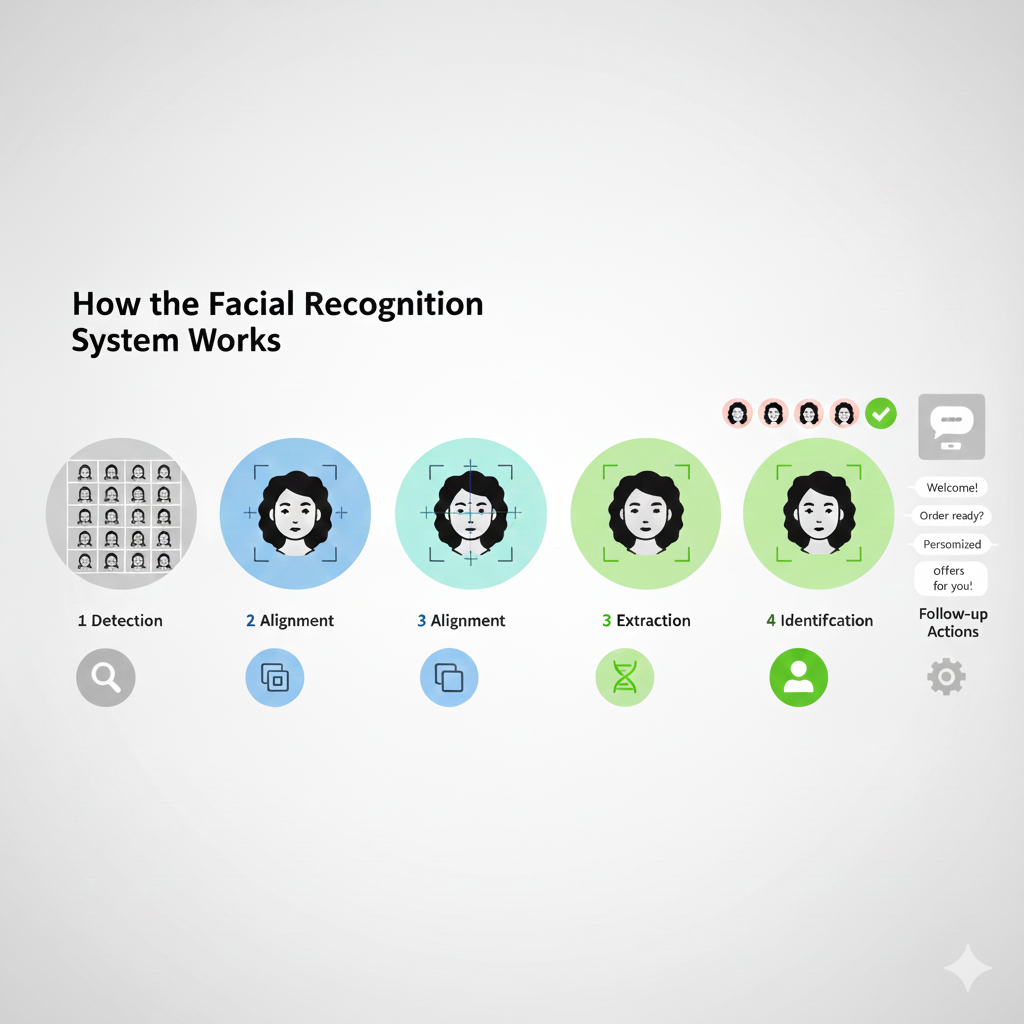
What is Image Recognition?
Image recognition enables systems to identify, classify, and interpret visual patterns from images and video streams. Using convolutional neural networks, transfer learning, and transformer-based vision models, Oodles builds image recognition pipelines that detect objects, recognize faces, read text, and classify scenes with production-level reliability.
What We Deliver
Custom Model Training
Domain-specific image recognition models trained using CNNs and Vision Transformers on curated and labeled datasets.
Real-Time Inference
Low-latency image recognition inference deployed on edge devices and cloud environments using optimized runtimes.
API & SDK Integration
Image recognition services exposed through REST APIs and SDKs for web, mobile, IoT, and enterprise applications.
Model Optimization
Performance tuning using quantization, pruning, TensorRT, and ONNX to ensure fast and efficient image recognition at scale.
Active Learning Pipeline
Human-in-the-loop feedback loops that continuously improve image recognition accuracy as new data is introduced.
MLOps & Monitoring
End-to-end MLOps pipelines to monitor image recognition accuracy, drift, and performance in live production systems.
High-Impact Use Cases
Object Detection & Tracking
Image recognition models that identify and track objects in real time for surveillance, retail analytics, and automated systems.
Facial Recognition
Face detection and recognition pipelines for secure access control, attendance systems, and identity verification.
Defect & Anomaly Detection
Image recognition–based inspection systems that identify defects and anomalies in manufacturing and industrial workflows.
OCR & Document Intelligence
Visual text recognition models that extract printed and handwritten text from scanned documents, IDs, and forms.
Medical Image Analysis
Image recognition solutions that assist clinicians by identifying patterns in X-rays, CT scans, and MRI images.
Visual Search & Recommendation
Image-based similarity search and recognition systems that power visual search and recommendation engines.
FAQs (Frequently Asked Questions)
Image recognition automates object detection, facial recognition, quality inspection, and document processing, reducing manual effort while improving operational accuracy and efficiency.
AI image recognition uses convolutional neural networks and deep learning models trained on large datasets to classify images, detect objects, and identify patterns with high precision.
Industries such as healthcare, retail, manufacturing, logistics, automotive, and security leverage image recognition for medical imaging, visual search, defect detection, and surveillance systems.
Image recognition models can be integrated via APIs into web, mobile, CRM, ERP, and cloud platforms, enabling seamless automation and real-time visual data processing.
Image recognition enables real-time visual search by analyzing uploaded images, matching features, and retrieving similar products or objects using AI-based similarity algorithms.
Enterprise-grade image recognition systems use encrypted data transmission, secure APIs, compliance frameworks, and controlled access to protect sensitive visual information.
Image recognition development uses TensorFlow, PyTorch, OpenCV, YOLO, deep learning frameworks, and cloud AI services to build scalable and high-performance computer vision applications.
Ready to Build with Image Recognition? Let's get in touch







We are ISO 9001:2015 Certified
Connect with us


Follow us